
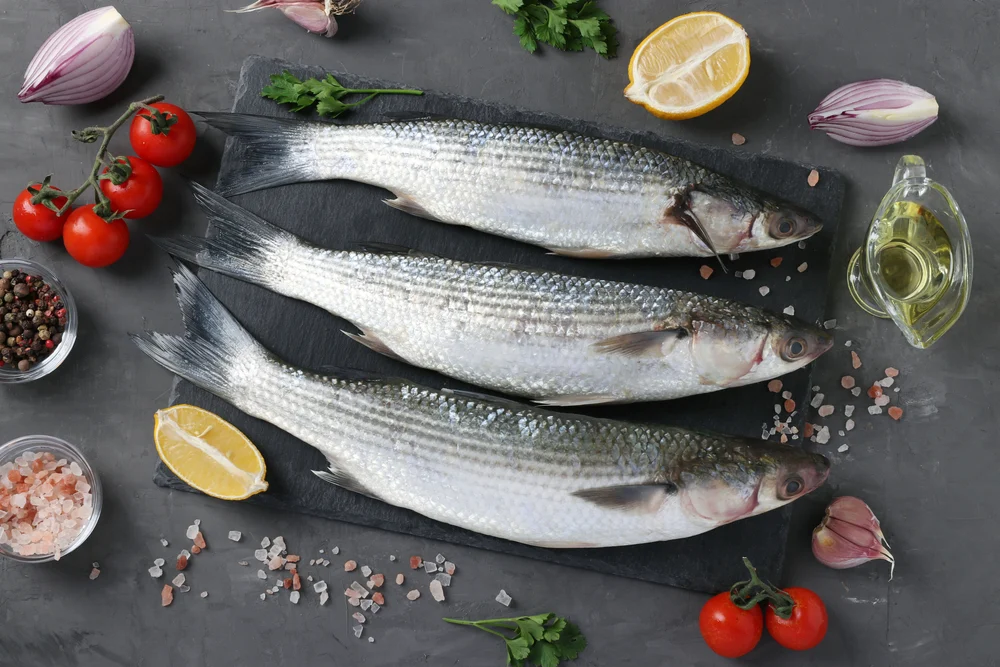
Key Nutritional Breakdown (Per 100g Raw Fillet)
According to the USDA nutrient database, a standard 100-gram serving of raw grey mullet provides:
- Calories: 150 kcal
- Protein: 24.8 g (Meeting nearly 50% of an adult’s daily protein requirement)
- Total Fat: 4.9 g (Primarily healthy, anti-inflammatory polyunsaturated fats)
- Carbohydrates: 0 g
Core Health Benefits
- Cardiovascular Efficiency: Grey mullet provides an excellent balance of Omega-3 fatty acids (EPA and DHA). Regular consumption improves blood vessel elasticity, regulates blood pressure, and helps lower bad cholesterol levels.
- Potent Antioxidant Shield: It is exceptionally rich in Selenium (providing roughly 85% of your Daily Value per serving). Selenium acts as a powerful structural antioxidant that safeguards cells against oxidative damage and reinforces your immune defense system.
- Nerve Health & Energy Production: Packed with Vitamin B12, grey mullet plays a crucial role in forming red blood cells and maintaining normal neurological functioning. It also delivers a solid dose of Vitamin B6 and Niacin (B3) to convert food efficiently into cellular energy.
- Fluid & Bone Regulation: With a generous supply of Potassium (458mg) and Phosphorus (200mg), it helps optimize cellular fluid balance, nerve signaling, and bone matrix strength.
Culinary Preparation Tips
Because grey mullet can sometimes have a earthy undertone depending on where it feeds, specific cooking styles optimize both its flavor and nutrients:
- Lemon Herb Baking: Clean the fish thoroughly, stuff the cavity with fresh lemon slices, minced garlic, and rosemary, then bake it. This method seals in the moisture and volatile Omega-3 oils without adding heavy cooking fats.
- Traditional Steaming with Salted Black Beans: A popular local method that uses savory fermented black beans, ginger shreds, and a splash of rice wine. This effectively cuts through any earthy oil flavor while preserving the delicate texture of the meat.
Add Comment