
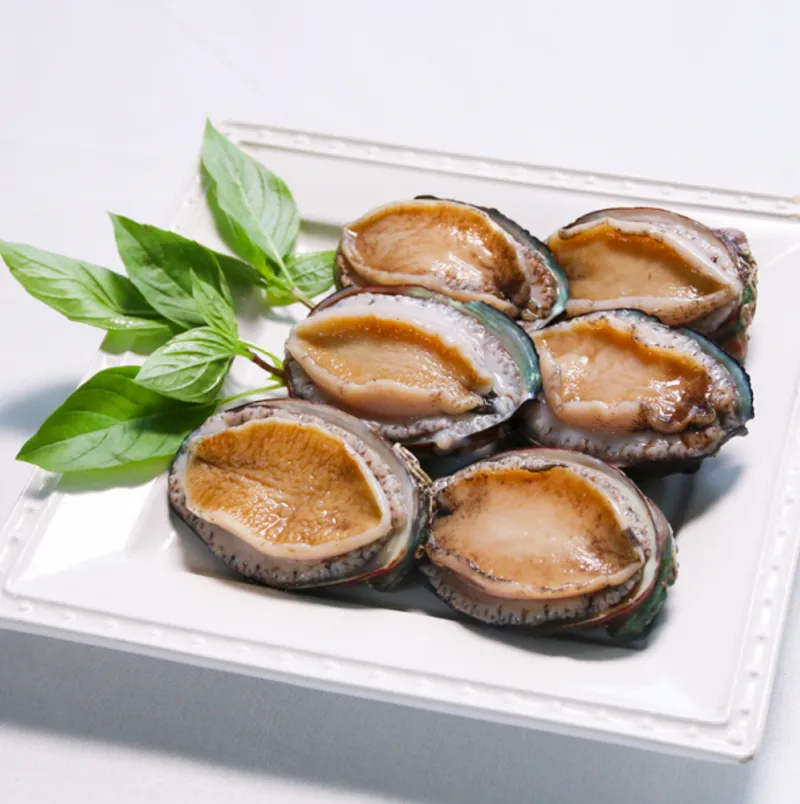
As of June 2026, the global abalone market exhibits a highly bifurcated landscape: live and frozen farmed abalones remain highly affordable due to aquaculture tech breakthroughs, while premium, large-spec dried abalones in luxury catering and collection/buyback markets maintain sky-high, recession-proof prices.
💵 Key Segments & Market Prices
The widespread farming of heat-tolerant abalone species has permanently lowered production costs for live and canned products, stabilizing the mass market.
1. Live & Frozen Abalone (Mass Consumption & Wholesale)
- Bulk Wholesale Prices: Across major seafood wholesale markets in mainland China, the average bulk wholesale price for live farmed abalone sits steady at RMB 84 – RMB 105 per kg (approx. $11.50 – $14.50/kg).
- Retail & Import Markets: In Hong Kong retail, fresh Dalian Abalones (12–13 pcs per catty) are highly cost-competitive. Meanwhile, premium frozen South African Abalone (11–13 pcs per lb) retails consistently at around HKD 300 per lb.
2. Premium Dried Abalone (Luxury Buyback & Collector Markets)
In stark contrast to mass retail, premium-grade dried abalones from Japan and South Africa serve as “hard currency” in luxury gift buyback and auction channels. Low head-counts (larger sizes) command massive premiums:
- Japanese Oma Abalone (12–15 heads): Bounded by strict collection rarity, trade and buyback prices range from HKD 38,000 to HKD 55,000 per catty.
- Japanese Kippin Abalone (20–25 heads): Acting as the market’s liquid benchmark, these fetch between HKD 12,500 and HKD 18,500 per catty.
- Japanese Yoshihama Abalone (30–40 heads): Highly popular for their rich, gooey “sticky core” (溏心) texture, trading actively at HKD 7,800 to HKD 12,000 per catty.
- South African / Middle Eastern Dried Abalone (10–15 heads): Offering lower collector premiums but steady culinary demand, priced around HKD 2,500 to HKD 4,500 per catty.
3. Canned Abalone (Fast-Moving Consumer Goods)
- Market Expansion: Driven by consumer demand for convenient, ready-to-eat premium seafood, the global canned abalone market is growing at an annual rate of roughly 6.5%.
- Price Tiers: Wild Mexican canned abalones still command $80–$200 per can. Australian canned alternatives ($30–$60) and domestic Asian farmed varieties ($7–$40) dominate the mid-to-low-tier gifting and fast-casual dining sectors.
📈 Industry Trends & Outlook
- Market Scale Evolution: The global abalone market size has reached approximately $700 million and is projected to expand to $1.18 billion by 2035 at a 6% CAGR. China currently drives over 90% of global production volume.
- Transition to Deep Processing: Thinning profit margins on live abalone due to surging yields are forcing major producers (such as Australia’s Yumbah and Chinese industrial leaders) to pivot. Capital is shifting toward high-value-added products like abalone sauce, instant frozen packs, and retort pouch meals to buffer fresh market price volatility.
1 Comment
People love your company not just because of the awsome products, but because of your service and the excellent team work!
Add Comment